
What a reading year it’s been so far! As of the end of June, I’ve read 64 books. I’ve also DNF’d 48 other books (now you see why I like the library so much). DNF, if you’re not familiar, stands for ‘did not finish’.
At the start of the year, in a post on Instagram, I outlined my hopes for my reading in the year ahead.
My reading goals at the start of this year were:
- Read a more balanced bookshelf (gender, race and ethnicity playing a role in that).
- Read more translated books
- Slow down, focus less on numerical reading goals and place priority in the titles I really want to read
- Continue to support the International Dublin Literary Award
How did I do? Let’s take a look at my reading goals
First, let’s look at diversity. I use this term in its widest sense.
Gender
I read 38 books by female authors, 21 books by male authors and five anthologies.
My 2019 reading stats showed me that 75% of the books I read were written by women. In 2020, that figure is more balanced at 59%.
At the end of 2019, I looked back on my reading year and realised that I had read the world through the female lens all year. I decided to make a more conscious effort to seek out male voices. I feel I did this and have found it interesting to reflect on the fact that of the 21 male authored books I’ve read from, only 4 have been written by white authors.
I realise I have read no books by transgender or non-binary authors. This is a regression from last year, which I plan to start addressing during #Transathon in July, as well as continuing to seek out their voices throughout the year.
Race/Ethnicity
I read 32 books by white authors (49%), 7 books by Black authors (11%) and 17 books by Asian authors (26%).
I would like to read more books by Latinx and Indigenous authors, as well as seeking out Arabic literature. I plan to make this a priority as the year goes on.
In 2019, 70% of the books I read were written by white authors. So far in 2020, that figure is still higher than I would like, but it’s down to 49%, so I’m seeing progress towards my goal of more racial equality on my bookshelf.
Ideally, I would like this figure (of books I’ve read by white authors) to be closer to 20-30%, more reflective of the fact that 11.5% of the world population is white (according to a quick Google search), while also taking into account the fact that English-language publishing is dominated by white voices.
I seek out racial diversity from a place of excitement and hunger for learning and stories, something which I talk about a bit later in this blog.
Country of Birth
Around February/March, I started to think about how much easier it might be to get your book into the hands of English-speaking readers if you are born in the US and UK, and how country of birth has an impact on the way authors are viewed by the English-speaking publishing world, and further; what stories certain authors are allowed to tell.
I started to log (and backlog) the country of birth of the authors I was reading. This was purely for my own interest, but I will say that the majority of authors I’ve read from were born in the UK and US.
I then categorised by continent and, excluding the UK/US, the continent that I read the most books from was Asia.
The country of birth of an author, the implications of translation and the difficulties faced by non-UK/US-born authors is something I’m growing in consciousness about, continually thinking about and reflecting upon.
It’s also a very complex issue in terms of identity and heritage, but I do want to do better at seeking out non-US/UK-born authors.
LGBTQ+
I had no formal way of categorising this in the first half of the year, as I don’t necessarily feel that all authors who exist on the LGBTQ+ spectrum will feel able to (or should have to) share their sexuality or gender identity publicly.
That said, I scanned through the books I’ve read and 9 of them explore LGBTQ+ themes or are written by authors who are open in expressing that they are lesbian, gay, bisexual, asexual, queer or existing elsewhere on the LGBTQ+ spectrum.
Comparisons made to the first half of 2019 reveal that I only read four books which were written by LGBTQ+ identifying authors, or authors whose work explored LGBTQ+ themes.
I would like to read even more books that explore LGBTQ+ themes or that are written by LGBTQ+ writers. I plan to follow the Polari Prize this year, for starters, and look forward to continually seeking out LGBTQ+ writing.

Some books that made it onto the Polari Prize longlistsAlthough in 2020 I’ve been (mostly) seeing improvement in the diversity of what authors I’m reading, as compared to my 2019 stats, I do feel that I still have work to do in seeking out a wide range of different voices.
Do you notice any gaps in what I’m reading that I have missed out in my commentary above?
I realise, for example, that I need to do better in seeking out work by disabled authors. I have begun tracking this in the authors I’m reading, as I have learned that disabled authors face multiple barriers to publication.
I realise that this will seem arbitrary to some people reading this. However, I do think that once you start peeling back the cover on publishing and learning what’s happening underneath; you may realise how important paying attention to your reading habits in this way is.
In terms of my other reading goals, let’s dive in to those and see how I’m doing there.
Translated books
I discovered a love for translated literature at the tail end of last year.
This year, I’ve read 15 books that have been translated into English (23% of total books read).
I’d like to continue to seek out translated literature in the second half of 2020 and hope to see this percentage grow. I’d love to reach 30% translated literature, with a view of increasing this to 40% in 2021. One way that I intend to do make a conscious effort to prioritise translated literature is by participating in a readathon that celebrates Women in Translation, which is taking place throughout August.
Slow down with my reading
Well, this goal was harder than I thought.
February and June were my slowest reading months, but this was connected to high stress in my personal life.
Although I now totally ignore the number of books I’ve read, I’ve really struggled, on the whole, to detach from the “must be reading, must be achieving” mindset that I’ve been running with for the past two years.
The desire to read more also comes from a place of hunger: hunger for great stories and a hunger for learning.
I’m not somebody who considers myself well-read. This comes from a position of knowing just how many great stories there are out there that I’ve yet to read, and how much knowledge there is out there for me to consume and build upon.
While I realise that reading over 100 books a year is highly unusual, and comparably I may be “better read” than some people in the world; I don’t feel the need to compare my own reading to others and therefore don’t mark myself “better read” simply because I read a lot.
I could go down a rabbit hole on this point, but I do think in the literary community there are some groups who believe that you are more of a reader, or a better reader, based on how much you read. I don’t ascribe to this mindset.
However, slowing down, for me, is part of a wider lesson in mindfulness. I’m trying, but so far I’m struggling more than I anticipated.
Any advice on how to slow down not put pressure on reading would be very welcome!
International Dublin Literary Award
If you saw my Instagram stories in recent weeks, you will see that I have been talking about literary awards a lot (see my Literary Awards highlight for more info).
Although I withdrew from my challenge #readingthedublinlitaward earlier this year due to personal reasons, I would like to pick up with the award again once the shortlist is announced.
The award process is currently on hold due to COVID-19, but their Twitter account promises to keep us posted.
Favourite Reads of 2020 So Far
At the start of July, I shared a list of my favourite reads of 2020 so far on Instagram. It’s a real mix of fiction, non-fiction, poetry and graphic novels/graphic memoirs/manga.
Here’s the list in full:
- MY BROTHER’S HUSBAND by Gengoroh Tagame, tr. unnamed
- MY NAME IS WHY by Lemn Sissay
- THERE THERE by Tommy Orange
- DEAF REPUBLIC by Ilya Kaminsky
- THE LAST ACT OF LOVE by Cathy Rentzenbrink
- NIGHT SKY WITH EXIT WOUNDS by Ocean Vuong
- BREAKFAST AT BRONZEFIELD by Sophie Campbell
- THE BUTCHERS by Ruth Gilligan
- THEY CALLED US ENEMY by George Takei
- MY YEAR OF REST AND RELAXATION by Ottessa Moshfegh
- LOVESTAR by Andri Snær Magnusson, tr. Victoria Cribb


It shocked me to realise how few of these books I have shared reviews for. I think this is partly due to feeling like I have nothing to analyse or critique about them. Many, in fact, relate to peoples personal lived experiences. However, I realise that by not sharing my thoughts on them I am doing the book somewhat of a disservice, so I do plan to rectify that in the coming weeks and months.
My Hopes For the Rest of 2020
In the rest of 2020, I look forward to leaning into translated literature, books written by authors who don’t look, identify or have the same heritage or background as me (as well as recognising the intersectionalities in peoples identities and seeking out underrepresented voices in my local community).
As a cis, straight, white, able-bodied Scottish woman, this is one small, yet exceptionally important, way I can resist and fight back against the rise in hate and phobia directed towards minority groups that is sadly becoming all too common in the communities I belong to. I, of course, recognise that reading is not going to save the world. However, I do believe that knowledge is a great way to challenge prejudice and gain the confidence to stand up against unacceptable behaviour as and when it happens.
So with that said, here are some of the books I’m most excited to read (in no particular order). Consider them five star predictions, if you will. I’ve also noted next to each what it is about them which really draws me in.
- THE GOOD IMMIGRANT edited by Nikesh Shukla – As a Scottish immigrant in Iceland, my love for immigrant stories has deepened and taken on new meaning. This is a book that has been on my hotly anticipated list since it came out.
- RAINBOW MILK by Paul Mendez – Published by the ever-fantastic Dialogue Books, Mendez’s Rainbow Milk is a book I’ve been excited to read for basically all of 2020. It’s a book deserving of time, attention and space for reflection, which is exactly what I plan to give it.
- NIGHTINGALE POINT by Luan Goldie – Scottish writer, Goldie, writes about the group of residents living in a London tower block. With such a fantastic premise, I’ve been looking forward to reading this one for a while. It was bumped up my TBR (to be read) and onto this list when I realised Goldie is Scottish.
- THE BREAK by Katherena Vermette – When I raved about There There by Tommy Orange, a friend of mine sent me a review by @thunderbirdwomanreads which made me realise I had to add this book to my TBR pile immediately.
- BREASTS AND EGGS by Meiko Kawakami, tr. Sam Bett and David Boyd – I took part in #JanuaryinJapan this year and fell in love with Japanese translations. I’ve already seen some great reviews for this novel, and I’m excited to see what all the buzz is about.
- DEAR READER by Cathy Rentzenbrink – I loved reading Rentzenbrink’s memoir The Last Act of Love. Her latest book, Dear Reader, promises to be a love letter to those who love reading.
- SONNY AND ME by Ross Sayers – It is so rare to find books that are written in Scots language. In fact, I haven’t read any beyond the work of Anne Donovan (my favourite Scottish writer). I’m looking forward to reading Sayer’s YA novel written in Scots, and in the meantime his tweets keep me laughing.
- THE WINDRUSH BETRAYAL by Amelia Gentleman – After reading (and loving) My Name is Why by Lemn Sissay, I realised that I need to learn more about the Windrush Generation and this aspect of British history. I’m hoping this will be a good starting point, as it was shortlisted for the George Orwell Prize for Political Writing in 2020.
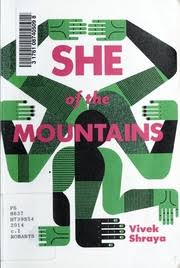
- SHE OF THE MOUNTAINS by Vivek Shraya – This is a very recent addition to the list. I read I’m Afraid of Men by Vivek Shraya and I felt that she put words to emotions and experiences I have had, in a way that I couldn’t. After posting about this on Instagram, Vaibhav @autumnalways sent me a message to say that he thought I would really like She of the Mountains. Immediately, it rocketed to my highly anticipated list!
- A LONG PETAL OF THE SEA by Isabel Allende, tr. Nick Caistor – Following two refugees as they fall in love, set against the backdrop of the Spanish Civil War. This sounds like an exceptional and beautiful book. I was delighted to see it in my library and to know I can get stuck into it during Women in Translation month.
- THIS IS NOT ABOUT ME by Janice Galloway – Ah, a memoir from a Scottish woman. Need I say more? If you know my reading tastes a little, you’ll know I love reading memoirs.
- TOO MUCH LIP by Melissa Lucashenko – This novel won the 2019 Miles Franklin award. I’ve been curious about Too Much Lip since learning that and I’m super excited to read some Australian literature. Friends in the UK have told me it’s exceptionally hard to get hold of there, so I’m hoping my library in Reykjavik will accept my (first ever) purchase request.




In addition to these, I also have a whole bunch of books lined up for August’s Women in Translation month – but given that that list consists of a further 20 books (ambitious, I know), I thought I’d save that for a different blog post.
Have you read any of my five star predictions? I’d love to know what you thought of them!
Summary
So it’s been some reading year so far! I’ve leaned into a love of translated literature and read more translations than ever before, I’ve discovered my heart is happy when I’m reading graphic novels, and I’ve realised that there are a lot of gaps in my bookshelf (in terms of what I’m reading and whose voices I’m seeking out).
Looking behind book titles and learning what’s behind the large literary awards is something that I think a lot of people have been doing recently. I like to see this level of critical engagement and hope that it will continue because I do believe that we, as a literary community, are better for it.
What do you think of all of this? How does your reading year compare?
 READING WITH KT
I love this post! I track a lot of similar data but to be honest haven’t taken the time to really review it and course correct as necessary. The Good Immigrant is one of my favourite books ever, it was such an eye-opener, I look forward to hearing your thoughts. I planned to read The Break in August as 9th Aug is World Indigenous Day, but have since discovered it has a lot of sexual violence in it, so bear that in mind if you weren’t aware – I think I will give it a miss for now. Will check out your links for WIT month, I don’t think I have that many on my shelves (despite a 600 strong TBR!) so that’s a very obvious gap
LikeLike
Thank you so much for your support, Martha! Ah I’m so looking forward to reading The Good Immigrant! It’s sitting back in Scotland just waiting for me to return home and pick it up. Thank you so much for sharing the content warnings on The Break with me. I’ll definitely be making sure I’m in the right head space going in to that. Really appreciate it! Hopefully you find some books to read during WIT month! I’m very new to translated literature myself but I’m really enjoying this journey of discovery!
LikeLiked by 1 person